About High Voltage Resistors
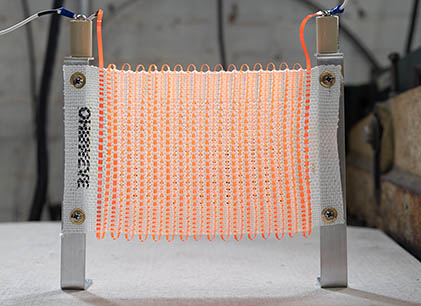
High voltage resistors typically handle voltages over 1000 volts. Ohmweve resistors handle voltages up to 20,000 volts. Specifications on high voltage resistors include voltage, power, dimensions, heat sink requirements and temperature coefficient (TCR). TCR pertains to how a resistance value changes with temperature. All resistors will change with temperature. The dimensions of high voltage resistors are often larger to prevent arc-over or creepage. Despite their ability to handle high voltages, they operate the same as low voltage resistors. (see our Resistor Primer page)
Materials
High voltage resistors are made from a variety of materials including ceramic composites, carbon film, metal oxide coatings or semi-conductive metals like nichrome. Ohmweve resistors are made from semi-conductive metal with low temperature variation supported by a high temperature yarn.
Preventing Corona Discharge in High Voltage Resistors
A consideration, when designing with high voltage resistors is corona. Above 30,000 volts the air around any bare metal will begin to ionize and conduct electricity. This may result in a purple glow around the conductor as electrons are stripped off of the nitrogen molecules nearby. Energy will be lost from the circuit and noise will be introduced. The voltage threshold for this phenomenon will vary with humidity, air pressure, surface shape and finish and frequency of the voltage. Rounded surfaces reduce electric field strength and reduce the incidence of corona. Sharp points do the reverse.
There are a number of methods to reduce problems from corona:
▪ Lower the voltage
▪ Round any sharp points
▪ Insulate conductors with non-conductive material to eliminate their contact with air
▪ Submerge the conductors in a dielectric oil
Standoff Distance
High voltages can arc through open air between (+) and (-) terminals when the distance is too close. Corona is a precursor to arcing, so standoff distance also varies with pressure, humidity and electrode shape and finish. Corona is not always visible to the human eye.
Creepage
Creepage is when electrical energy finds its way between (+) and (-) terminals along surfaces over time. The distance between terminals may appear fine at first but voltage in conjunction with ionization damages the dielectric (insulation) slowly until the two terminals make an electrical connection. Once this happens, electrical current can flow in small amounts or as high current arcs.
High Voltage Resistor Accessories
We also offer accessories for other types of resistors.
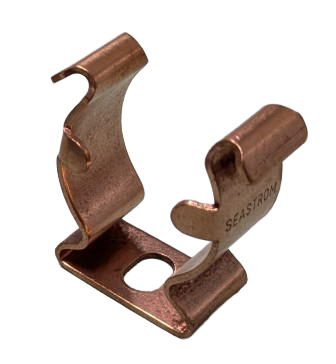
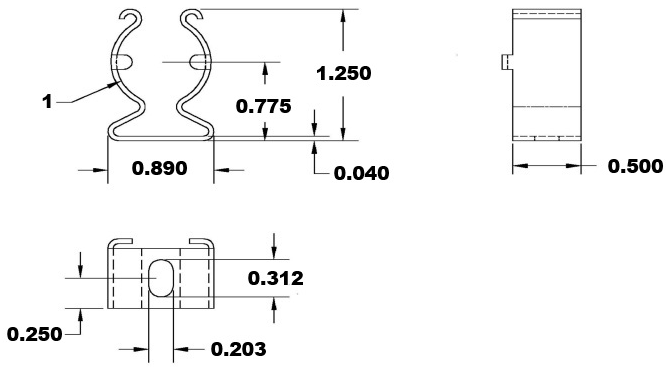
The resistor clips below provide an electrical connection for 1” diameter tubular resistors. Their natural spring action provides good electrical contact with the conductive end of the resistor. The material is beryllium copper.
Resistor Clip with Tab – Resistor Accessory
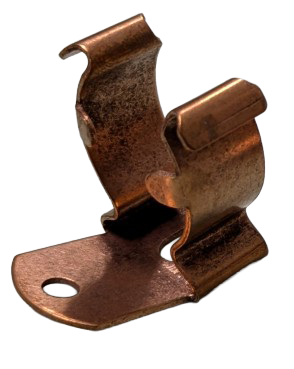
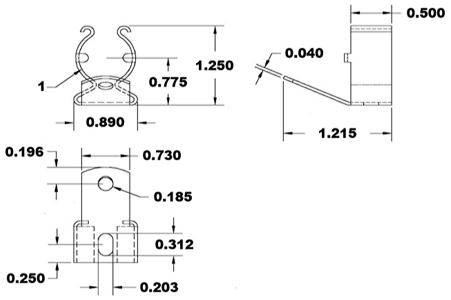
Resistor Clip without Tab – Resistor Accessory